

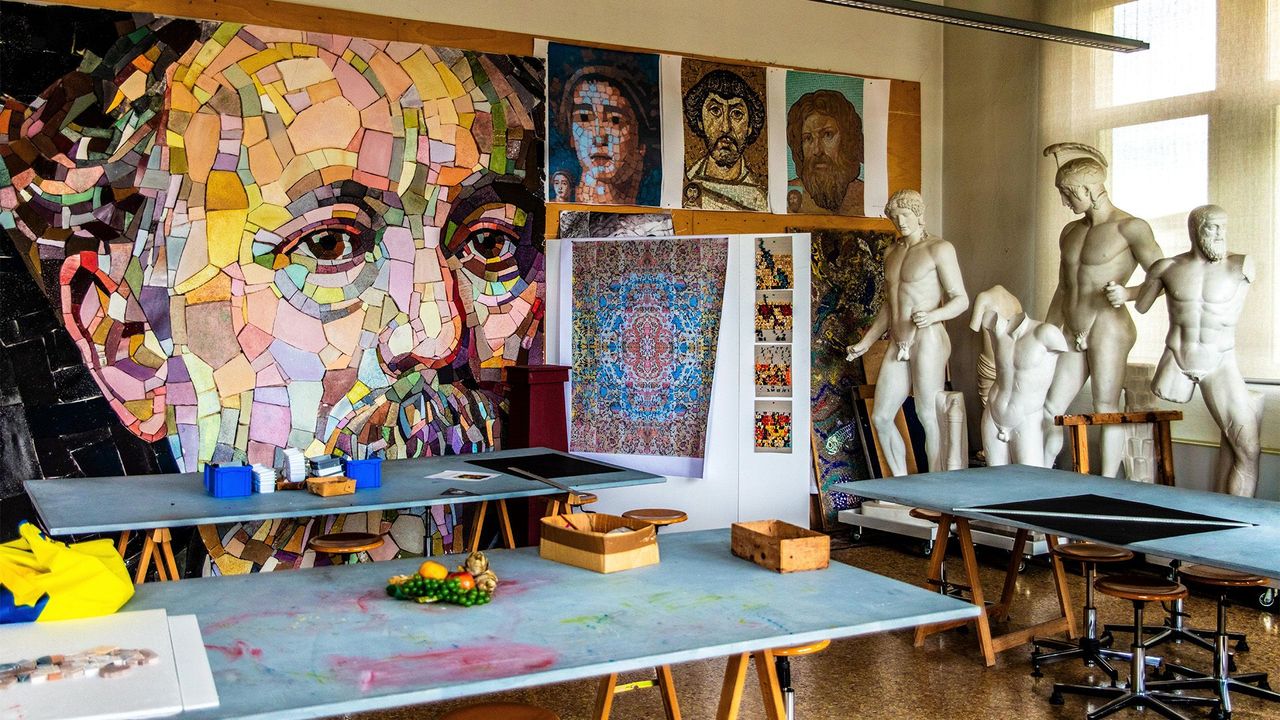
Tucked away in the northeastern corner of Italy, in the region of Friuli Venezia Giulia, lies a centuries-old craft quietly kept alive in a specialized school devoted entirely to the intricate art of mosaic making. While Italy is renowned worldwide for its contributions to art, architecture, and design, this particular school—little known beyond expert circles—serves as a living testament to a tradition that dates back to ancient Rome and Byzantium.
The Scuola Mosaicisti del Friuli, located in Spilimbergo, has been educating expert mosaic artists since the start of the 20th century. While Italy is frequently associated with Renaissance artwork, marble carvings, and magnificent churches, the precise art of mosaics occupies a special niche in the nation’s rich artistic tradition. This modest yet esteemed school is among the last institutions where the craft is imparted in its most authentic manner, maintaining age-old methods handed through the ages while evolving with modern artistic trends.
For those who are not acquainted with the craft, mosaics require meticulously arranging tiny bits of colored glass, stone, pottery, or other substances—referred to as tesserae— to form intricate designs and imagery. This artistic method requires great patience, accuracy, and a profound grasp of arrangement, color harmony, and the characteristics of materials. The outcome is a form that is both visually captivating and remarkably long-lasting, able to endure hundreds of years of use.
Students registering at the school come from different regions of Italy and from around the globe, united by a mutual enthusiasm for this complex art form. Their training extends over multiple years, where they learn about the technical elements of mosaic making in addition to art history, design fundamentals, and material science. Whether it’s grand architectural projects or detailed art pieces, the adaptability of mosaics is examined through practical experience with support from experienced teachers.
Walking through the school’s workshops reveals a vibrant mix of tradition and innovation. Ancient Roman and Byzantine motifs sit alongside modern abstract designs. The sound of hammers gently tapping tesserae into place echoes through the studios as students painstakingly arrange each tiny fragment. It is an environment where the past and present coexist, where age-old skills are being kept alive and reimagined for contemporary audiences.
The importance of this craft extends beyond aesthetic value. Mosaics have historically served religious, political, and social purposes. From the floors of Roman villas to the golden walls of Byzantine churches, mosaics have been used to convey stories, glorify religious narratives, and demonstrate wealth and power. The school’s mission is not only to preserve the technical skills required to create mosaics but also to impart an understanding of their cultural significance.
In today’s fast-paced digital age, the deliberate slowness of mosaic-making may seem anachronistic. Yet, this is precisely what draws many to the practice. The physicality of the work—the feel of stone, the play of light on glass, the act of piecing together a larger picture from individual fragments—offers a meditative counterbalance to the transient nature of modern life. For students and artists, mosaic making is as much about discipline and reflection as it is about visual artistry.
The endurance of these time-honored arts is not without obstacles. In recent years, public knowledge of mosaic art has waned, and financial support for expert craft education has been impacted by wider educational changes. Nevertheless, the institution’s standing and excellence in teaching still draw students and project requests globally. From restoring churches to creating public artworks, alumni of the Scuola Mosaicisti del Friuli engage in projects that underscore the lasting significance of their skill.
Over the past few years, there has been a significant revival of enthusiasm for crafted artistic works and traditional skills. This revived admiration for physical, lasting art forms has once again highlighted mosaics, attracting attention not only in Italy but worldwide. Designers, architects, and art enthusiasts are increasingly turning to mosaics to provide texture, dimension, and historical context to modern environments. The institution has been central to this revival, working alongside modern artists and engaging in exhibitions that demonstrate the adaptability of mosaic craftsmanship.
The process of creating a mosaic is, by nature, meticulous and time-consuming. Each piece must be cut, shaped, and set with care. Artists must plan their compositions in advance while remaining flexible enough to adjust to the unpredictable variations of natural materials. This balance of planning and improvisation makes mosaic art a discipline that combines technical mastery with creative intuition.
The methods imparted at the institution cover both conventional direct approaches—where tesserae are positioned face-up on the definitive surface—and indirect techniques, where pieces are arranged in reverse on provisional surfaces before being transferred. Learners acquire skills working with diverse materials, including smalti (hand-cut glass fragments), marble, ceramics, and even reclaimed or innovative materials. The use of contemporary materials signifies the school’s dedication to advancing the art form while staying true to its historical foundations.
Preserving cultural heritage is an important part of the school’s mission. Italy, which boasts some of the world’s renowned mosaics, has the constant challenge of maintaining and restoring ancient creations. The skills honed at the Scuola Mosaicisti del Friuli are frequently needed for the restoration of heritage sites, making sure that historical mosaics remain valued by future generations.
The town of Spilimbergo itself has embraced its role as a guardian of this ancient art. Public spaces, galleries, and even ordinary streets bear traces of mosaic artistry, creating an environment where art is seamlessly woven into the fabric of daily life. Visitors to the region can witness not only the creation of new works but also the preservation of pieces that tell the story of centuries past.
For the students who pass through the school’s doors, the experience is transformative. The journey from novice to master mosaicist is one of patience, craftsmanship, and dedication. Many go on to establish their own studios, work on prestigious restoration projects, or collaborate with international artists and architects. The skills acquired are not easily replicated by machines or mass production, making each mosaic a unique and lasting contribution to the world of art.
The lasting attraction of mosaic art is found in its widespread appeal and versatility. Though originating from age-old customs, mosaics are still developing, being incorporated into today’s design, architecture, and modern art. The Scuola Mosaicisti del Friuli, by maintaining and promoting this legacy, is crucial in keeping the craft of mosaics vibrant and significant in the contemporary world.