

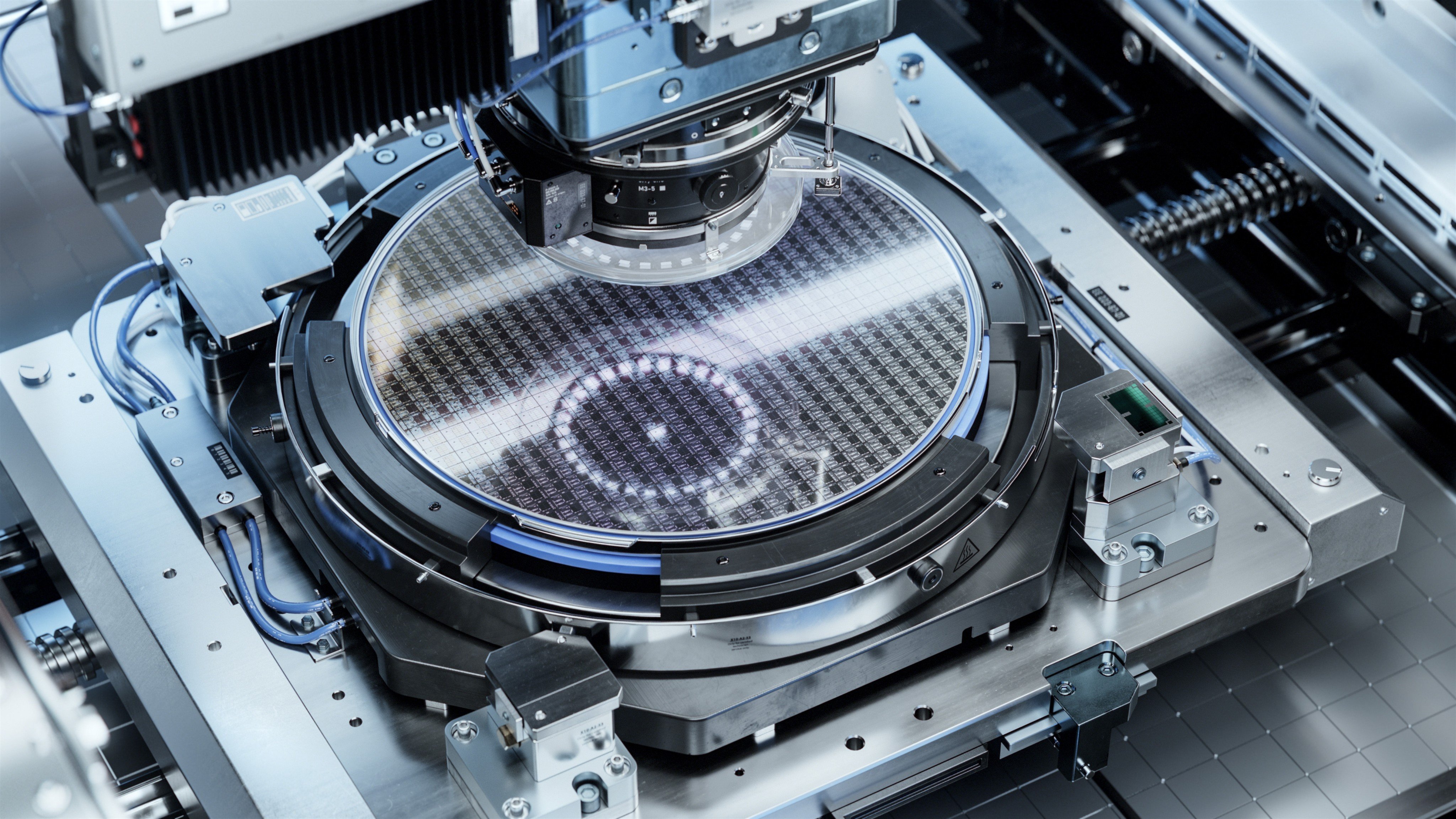
Extreme Ultraviolet lithography, commonly known as EUV lithography, is the most critical manufacturing technology enabling the continued scaling of semiconductor process nodes below 7 nanometers. By using light with a wavelength of 13.5 nanometers, EUV allows chipmakers to print extremely small and dense circuit patterns that were not economically or physically feasible with previous deep ultraviolet techniques. As the semiconductor industry pushes toward 3 nanometers, 2 nanometers, and beyond, EUV lithography is evolving rapidly to meet unprecedented technical and economic demands.
From First-Generation EUV to High-Volume Manufacturing
Early EUV systems were primarily research tools, constrained by low light source power, limited uptime, and complex mask handling. Over the past decade, EUV has matured into a high-volume manufacturing technology used by leading foundries and integrated device manufacturers. Modern EUV scanners can now support thousands of wafers per day with production-level reliability.
Key improvements that enabled this transition include:
- Increased EUV source power, moving from below 50 watts in early tools to over 250 watts in production systems
- Improved collector mirrors that efficiently direct EUV photons toward the wafer
- Advanced vacuum systems to prevent EUV light absorption by air
- Better photoresists optimized for EUV wavelengths
These breakthroughs enabled EUV to take over tasks that once required intricate multi-patterning in earlier lithography, substantially cutting process complexity and lowering the likelihood of defects.
Streamlined Patterning Enabled by a Single Exposure and Decreased Overall Complexity
One of the most significant advantages of EUV lithography is its ability to perform single-exposure patterning for features that previously required double or quadruple patterning. At the 7-nanometer node and below, deep ultraviolet lithography required multiple aligned exposures, increasing cost, cycle time, and yield loss.
EUV simplifies manufacturing by:
- Cutting down how many masks are required in each layer
- Minimizing overlay discrepancies from one pattern to another
- Streamlining and shortening complete process sequences
- Enhancing pattern accuracy within tightly packed logic designs
This streamlining becomes crucial as process nodes become smaller, since even tiny misalignments may trigger functional breakdowns at near‑atomic scales.
High Numerical Aperture EUV and the Path Beyond 2 Nanometers
As standard EUV approaches its resolution limits, the industry is introducing High Numerical Aperture EUV, often referred to as High-NA EUV. Numerical aperture determines how finely a lithography system can focus light, and increasing it directly improves resolution.
High-NA EUV systems increase numerical aperture from 0.33 to approximately 0.55, enabling:
- Reduced minimum feature dimensions achieved without extensive pattern fragmentation
- Enhanced precision in edge positioning
- More effective scaling of key layers such as the gate and metal interconnect structures
These systems are physically larger and more complex, requiring new optical designs, tighter vibration control, and redesigned fabs. However, they are essential for enabling process nodes at 2 nanometers and smaller while maintaining economically viable yields.
Advances in EUV Photoresists and Materials
Photoresists play a decisive role in how effectively EUV patterns can be transferred onto silicon. Traditional chemically amplified resists struggle with the tradeoff between resolution, line edge roughness, and sensitivity at EUV wavelengths.
To address this, material suppliers are developing:
- Metal-oxide-based resists engineered for enhanced absorption performance
- Refined chemically amplified resists designed to minimize stochastic irregularities
- Innovative underlayer materials formulated to boost pattern definition
Minimizing stochastic phenomena, including unpredictable micro-bridges or fractures, becomes crucial at advanced nodes, since even one defect may influence transistor performance or overall yield.
Mask Technology and Defect Control Improvements
EUV masks differ drastically from conventional photomasks, using reflective multilayer stacks rather than transparent glass, and their extreme defect sensitivity means even minor flaws may be transferred straight onto wafers.
Recent innovations include:
- Refined multilayer coating methods designed to minimize inherent defects
- State-of-the-art actinic inspection systems that evaluate masks through EUV illumination
- Pellicles that shield masks while staying transparent to EUV exposure
Pellicle technology has posed considerable difficulties, as it demands extremely thin materials that can also withstand intense EUV power, yet advances in this field have markedly extended mask service life and enhanced overall yield consistency.
Computational Lithography and Design Co-Optimization
EUV lithography’s progression extends beyond hardware, as computational lithography and design technology co-optimization grow ever more vital for advancing to smaller nodes. Sophisticated algorithms are used to model the interaction of EUV light with masks, resists, and the wafer’s surface profile.
These tools enable:
- Refined mask layouts engineered to offset optical aberrations
- Design guidelines crafted to align with the unique capabilities of EUV
- Prompt identification of production risks throughout the chip design process
By coordinating design choices with manufacturing limits, chipmakers can gain the greatest benefit from EUV systems while reducing the need for expensive redesigns.
Economic and Strategic Impact on the Semiconductor Industry
EUV lithography systems stand among the costliest manufacturing instruments ever created, with each scanner priced at well over one hundred million dollars, yet their high expense is offset by the economic value they deliver by cutting overall process steps and allowing far greater transistor density per wafer.
EUV has evolved into a pivotal technology, shaping:
- Global competition in advanced logic manufacturing
- Long-term capital investment strategies of foundries
- Supply chain dependencies for optics, materials, and precision components
Access to advanced EUV systems increasingly defines which companies can compete at the leading edge of semiconductor technology.
A Broader Perspective on EUV’s Ongoing Evolution
EUV lithography is no longer a single breakthrough but an evolving ecosystem of optics, materials, computation, and manufacturing discipline. Each generation of EUV improvements extends the practical limits of Moore’s Law while reshaping how chips are designed and built. As High-NA EUV, advanced resists, and tighter design integration converge, the technology continues to unlock smaller process nodes not by one dramatic leap, but through sustained, coordinated innovation across the entire semiconductor value chain.