

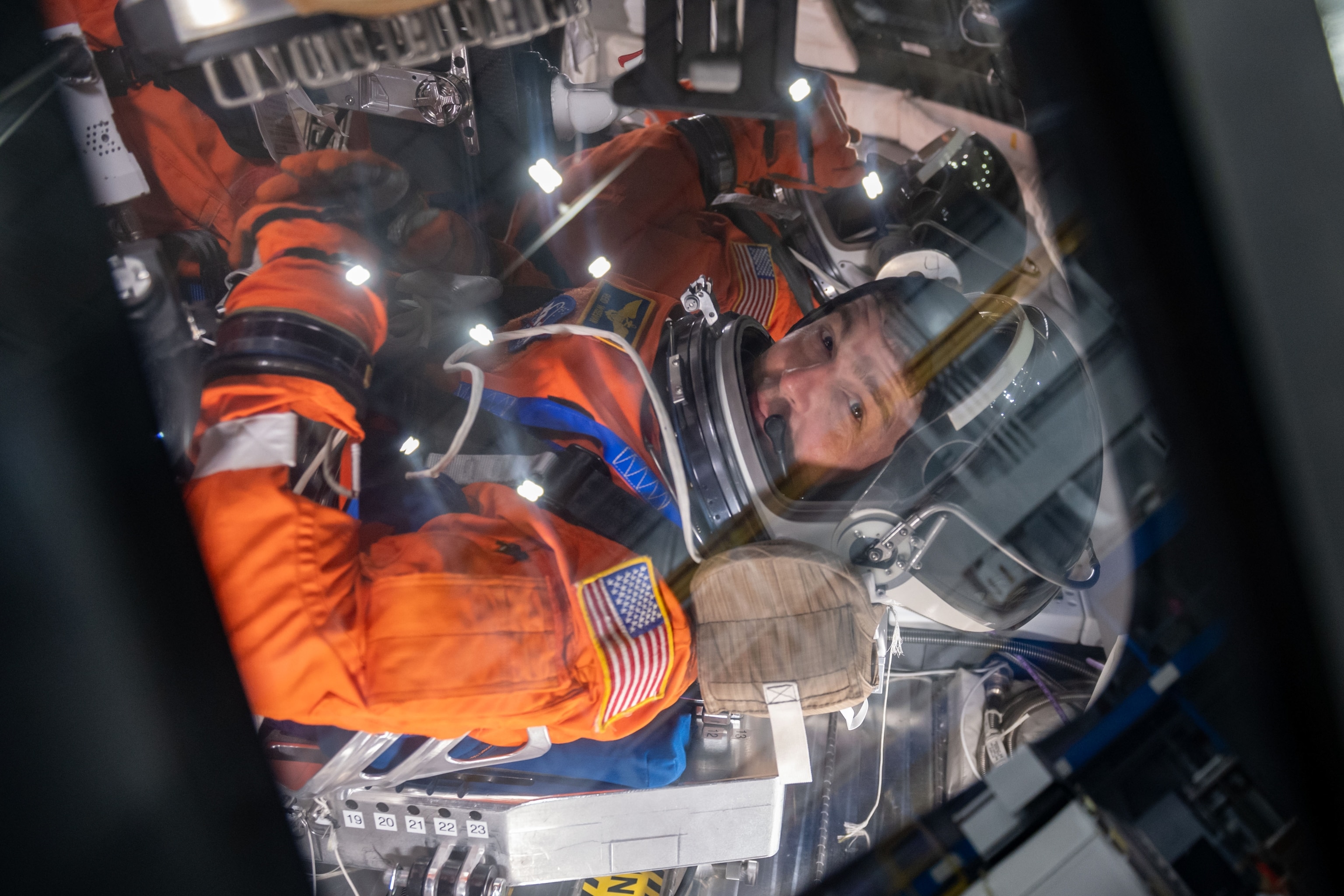
A new lunar mission is carrying more than astronauts—it is also transporting living biological models designed to reveal how space affects the human body. These innovations could reshape how future crews prepare for long-duration journeys beyond Earth.
Before the crew of NASA’s Artemis II mission embarked on their journey around the Moon, a unique scientific experiment was already traveling with them. Alongside the astronauts inside the Orion spacecraft are miniature biological models—often referred to as “avatars”—that represent key aspects of each crew member’s physiology. These tiny systems, engineered from human cells, are expected to provide unprecedented insights into how the human body responds to the extreme conditions of deep space.
The experiment, known as AVATAR (A Virtual Astronaut Tissue Analog Response), represents a significant advancement in space medicine. By using tissue samples derived from the astronauts themselves, scientists can observe biological responses in real time, rather than relying solely on pre- and post-mission medical evaluations. This approach opens a new window into understanding how prolonged exposure to space environments may affect human health at a cellular level.
Researchers construct each of these biological models from bone marrow tissue, a component essential to the body’s immune defenses, and they chose this material to gain clearer insight into how microgravity and increased radiation might affect immune activity. Findings from these studies may prove vital for crafting personalized health approaches for astronauts, especially as missions push deeper into space.
A new frontier in personalized space medicine
Space exploration specialists view one of the most compelling elements of the AVATAR study as its capacity to enable more personalized medical strategies for astronauts. The physiological pressures of space vary widely, and individuals often display different reactions to these conditions. By examining how each astronaut’s cells behave in a space environment, researchers can start pinpointing differences in vulnerability and resistance.
This level of personalization could prove essential for future missions, especially those involving extended stays on the Moon or journeys to Mars. If researchers can determine how specific individuals respond to radiation or other hazards, they may be able to tailor medical supplies, treatments, and preventive measures accordingly. In practical terms, this could mean equipping astronauts with customized therapies designed to mitigate risks unique to their biological profiles.
The concept also resonates with the wider movement in medicine toward precision healthcare, in which treatments are tailored to each individual instead of being applied in a uniform way, and within space exploration this perspective could strengthen safety and performance alike by helping ensure that astronauts stay healthy and fully capable throughout their missions.
Another long-term goal is to deploy such biological models ahead of human missions. By sending these “avatars” into space in advance, scientists could gather valuable data before astronauts even leave Earth. This proactive strategy would allow mission planners to anticipate potential health issues and address them before they become critical.
Gaining insight into the dangers that deep space presents
Space is an inherently challenging environment for the human body, characterized by conditions that differ dramatically from those on Earth. To better understand these challenges, researchers often refer to a framework known as RIDGE, which outlines the primary hazards of space travel: radiation, isolation, distance from Earth, altered gravity, and environmental factors.
Radiation exposure remains a major concern, especially once travelers move beyond Earth’s protective magnetic field, where high-energy particles released by solar events and cosmic phenomena can pass through the body, potentially harming cells and elevating the likelihood of lasting health problems. The AVATAR experiment has been purposefully created to provide insight into how this radiation influences bone marrow and the immune system.
Microgravity, another key factor, influences nearly every system in the body. It can lead to muscle atrophy, bone density loss, and changes in fluid distribution. Understanding how these effects manifest at the cellular level is essential for developing countermeasures that can help astronauts maintain their physical health.
Isolation and confinement also exert significant influence, particularly during missions in which crews remain for long stretches within compact, enclosed environments. Although the Orion spacecraft incorporates advanced systems, its interior space is modest compared with larger facilities such as the International Space Station. As a result, it provides a valuable environment for examining how restricted living areas affect both physical health and psychological resilience.
As spacecraft travel greater distances from Earth, the situation grows more challenging, as longer communication delays and reduced access to immediate assistance become unavoidable. This highlights how crucial it is to provide astronauts with the expertise and resources required to handle their own health autonomously.
Monitoring human performance during the mission
In addition to the AVATAR experiment, the Artemis II crew is actively participating in a range of studies aimed at understanding how spaceflight affects the human body and mind. These efforts involve continuous monitoring and data collection throughout the mission, providing a comprehensive picture of astronaut health.
Crew members are equipped with wearable devices that track movement patterns, sleep cycles, and overall activity levels. These devices offer real-time insights into how astronauts adapt to life in microgravity, including changes in rest patterns and physical activity. By comparing this data with pre- and post-mission measurements, researchers can identify trends and potential areas of concern.
Mental health is another critical area of focus. Astronauts are asked to provide feedback on their emotional and psychological states at various points during the mission. This information helps scientists understand how stress, isolation, and confined living conditions influence mood and cognitive function.
Biological sampling remains an essential part of the research, with the crew gathering saliva specimens at various phases of the mission, and these are subsequently examined for biomarkers linked to immune performance and stress. Such samples help uncover how the body adapts to the combined impact of radiation, microgravity, and additional environmental conditions.
Interestingly, researchers are also examining whether dormant viruses in the body become reactivated during spaceflight. Previous studies have shown that certain viruses can resurface under stress, and understanding this phenomenon could be important for maintaining astronaut health during long missions.
Preparing for the return to Earth and beyond
The research continues even after the spacecraft arrives back on Earth, as the post‑mission stage plays a crucial role in revealing how astronauts regain normal function after their time in orbit. Once they land, the crew is put through various physical evaluations aimed at determining how well they can adapt again to Earth’s gravitational pull.
These evaluations often include tasks that simulate everyday movements, such as climbing, lifting, and balancing. While these activities may seem routine, they can be surprisingly challenging after spending time in a microgravity environment. The body must readapt to the forces of gravity, and this process can take several days.
One area of particular interest is the inner ear, which plays a key role in balance and spatial orientation. Spaceflight can disrupt this system, leading to temporary difficulties with movement and coordination. By studying how astronauts recover, researchers can develop strategies to ease this transition and improve overall safety.
These conclusions also hold significance for upcoming lunar expeditions, where the Moon’s reduced gravity introduces distinct challenges. Astronauts touching down on its surface might have to carry out duties right away, with no opportunity for prolonged recovery. Gaining insight into how the human body reacts under these circumstances is vital for effective mission preparation.
The Artemis II mission represents a significant step forward in this area, as it includes data collection methods that were not available during earlier lunar programs. The insights gained from this mission will help inform the development of future exploration efforts, including the establishment of long-term habitats on the Moon.
Defining the next era in human space exploration
The integration of advanced biological research into space missions marks a turning point in how agencies approach human exploration. Rather than treating health monitoring as a secondary concern, it is now a central component of mission design. This shift reflects a growing recognition that understanding the human body is just as important as developing new spacecraft or propulsion systems.
The information gathered throughout Artemis II will feed into a wider base of expertise essential for sustaining long-term expeditions, and as space agencies and private organizations set their sights on destinations like Mars, preserving astronaut well-being over prolonged missions will become increasingly crucial.
In this context, experiments like AVATAR offer a glimpse into the future of space medicine. By combining cutting-edge technology with personalized approaches, researchers are building a foundation for safer and more sustainable exploration. The lessons learned from this mission will not only benefit astronauts but could also have applications on Earth, particularly in areas such as immunology and personalized healthcare.
The Artemis II mission is about more than reaching the Moon. It is about preparing for the next phase of human exploration, where journeys are longer, environments are more challenging, and the need for innovation is greater than ever. Through a combination of scientific research and technological advancement, this mission is helping to pave the way for a deeper understanding of what it means to live and work in space.