

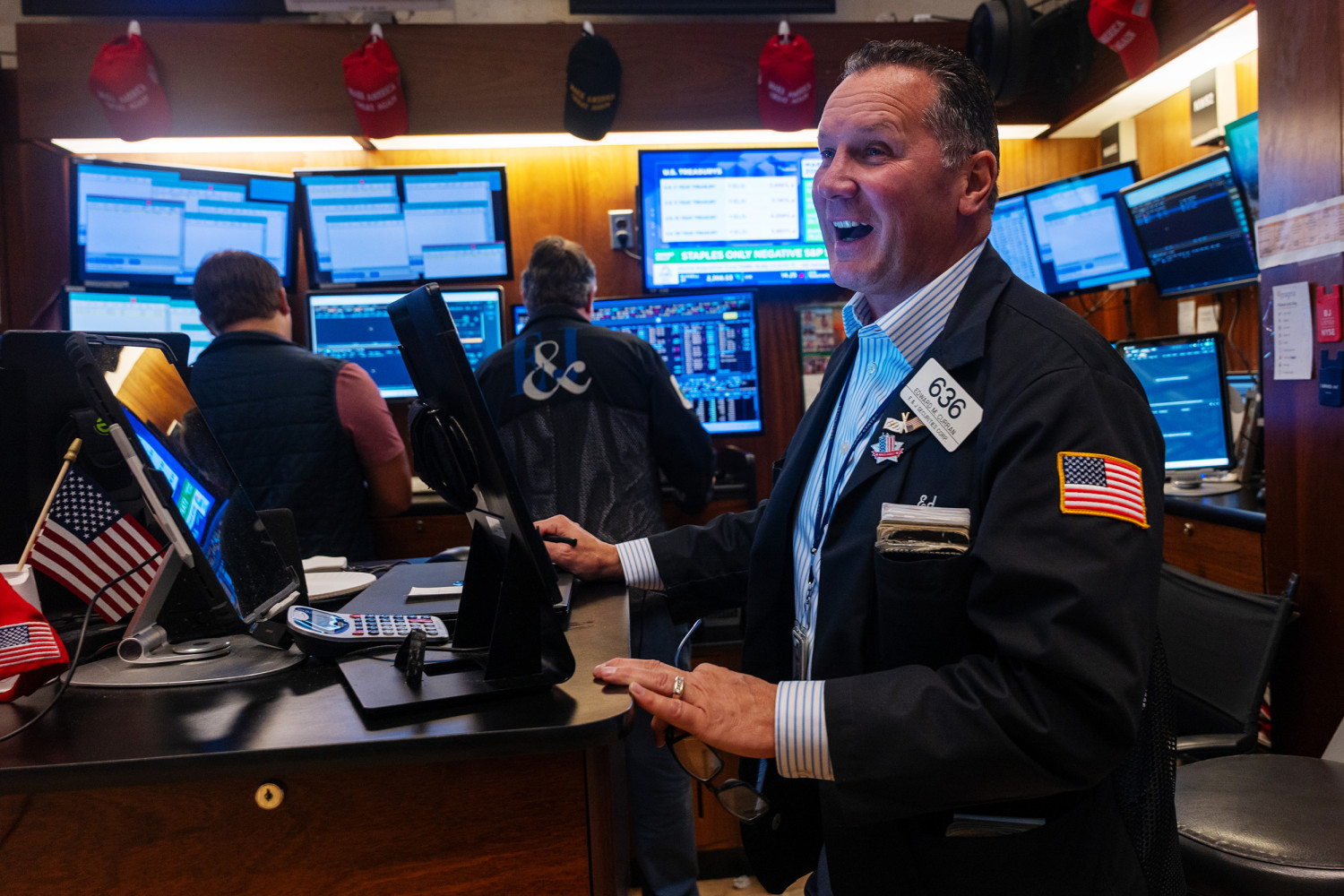
In the face of economic instability, the stock market consistently demonstrates unexpected vigor and stability, contrary to predictions, thereby retaining the trust of investors worldwide.
The surprising resilience of the stock market
In recent months, financial analysts and investors have been observing a remarkable phenomenon: the persistent stability and even growth of the stock market amid widespread economic volatility. Inflation, rising interest rates, and geopolitical tensions have created a complex environment that would normally lead to significant declines in equity values. Yet, the markets have demonstrated a level of endurance that few anticipated. This resilience reflects not only investor optimism but also the adaptability of global corporations navigating through challenging conditions.
The equity market’s results are frequently perceived as an indicator of the overall economy’s condition. In the past, economic unpredictability usually caused more reserved investment strategies, reduced business expenditures, and an inclination towards more secure assets like bonds or gold. Nevertheless, the current direction contradicts these historical behaviors. Key benchmarks, including the S&P 500, Dow Jones Industrial Average, and Nasdaq, have experienced continuous growth, suggesting that investors maintain confidence in the underlying long-term market principles, even amid temporary volatility.
An interpretation of this phenomenon is rooted in the ability of businesses and industries to swiftly adjust to evolving global circumstances. For example, tech companies have harnessed creativity and automation to sustain profits. Meanwhile, energy and healthcare sectors persist in drawing investor attention because of their critical functions in both advanced and new markets.
Factors driving market optimism
Another major aspect contributing to the stock market’s resilience is the surge of retail investors who have started trading in recent years. The transformation of investing—driven by digital platforms and mobile trading applications—has reshaped the global financial arena. Individual investors now hold a more significant position, frequently emphasizing long-term profits over short-term variations. Their involvement has supported maintaining high trading activities and liquidity, even as institutional investors lean towards more cautious methods.
Additionally, corporations have shown strong earnings reports despite higher operational costs. Many companies have successfully adjusted pricing strategies, streamlined supply chains, and adopted cost-saving technologies to preserve profitability. These strategic responses have reinforced investor confidence, suggesting that the market’s resilience is grounded in tangible financial performance rather than mere speculation.
Monetary policy has also been crucial. While central banks globally have enforced stricter measures to manage inflation, their careful stance on raising interest rates has assisted in preventing sudden market disturbances. The balance between controlling inflation and fostering economic growth has been sensitive yet successful, averting panic-induced sell-offs and guaranteeing that liquidity stays available to both investors and enterprises.
The balance between risk and reward
Despite this optimism, experts caution that the current environment still demands careful navigation. The coexistence of market growth and economic uncertainty means that investors must remain vigilant. Diversification, strategic asset allocation, and a long-term perspective have become more important than ever. While the stock market continues to provide opportunities, volatility remains a constant risk that cannot be ignored.
One of the most striking features of this period is how quickly sentiment can shift. A single geopolitical event, unexpected policy announcement, or disappointing earnings report can lead to sharp market reactions. The speed of information dissemination through digital platforms amplifies these movements, forcing investors to react faster than in previous decades. This rapid cycle of reaction and adjustment has become part of the market’s new normal, blending unpredictability with resilience.
Para los inversores a largo plazo, este contexto resalta la importancia de la paciencia y la capacidad de ver el panorama completo. Las fluctuaciones del mercado a corto plazo pueden parecer preocupantes, pero la historia ha demostrado repetidamente que los mercados tienden a recuperar y crecer con el tiempo. Aquellos que se concentran en activos de calidad, fundamentos consistentes y una estrategia de inversión disciplinada suelen estar mejor preparados para afrontar la incertidumbre y aprovechar las recuperaciones eventuales.
An optimistic yet careful perspective
In the future, numerous market experts anticipate the persistence of market momentum, though at a reduced speed. Economic obstacles endure—from worldwide supply chain issues to changes in labor trends—but the general perspective remains moderately positive. Businesses that persist in evolving and adjusting are expected to maintain their market standings, while industries such as renewable energy, healthcare technology, and digital finance are expected to experience continued expansion.
The transformation of investor habits is influencing the market’s trajectory. Investing in environmental, social, and governance (ESG) areas has seen a substantial increase, as more investors focus on ethical and sustainable businesses. This change not only mirrors evolving societal standards but also motivates companies to balance profit with accountability. As these patterns develop, they may reshape the factors that impact long-term market success.
The durability of the stock market in the face of persistent uncertainty underscores the intricate dynamics of human actions, business strength, and economic strategies. Although challenges persist, the ongoing strength of worldwide stocks indicates that belief in creativity, efficiency, and flexibility remains robust. Those investors who engage with the market using strategic anticipation rather than anxiety may discover that opportunities remain even during unstable periods.
The capacity of the stock market to flourish even amid extensive uncertainty highlights the tenacity of world economies and the progressive approaches of today’s investors. Although obstacles will persist in challenging confidence and stability, the market’s present robustness underscores that flexibility and a forward-looking perspective are crucial assets in the financial sector.