

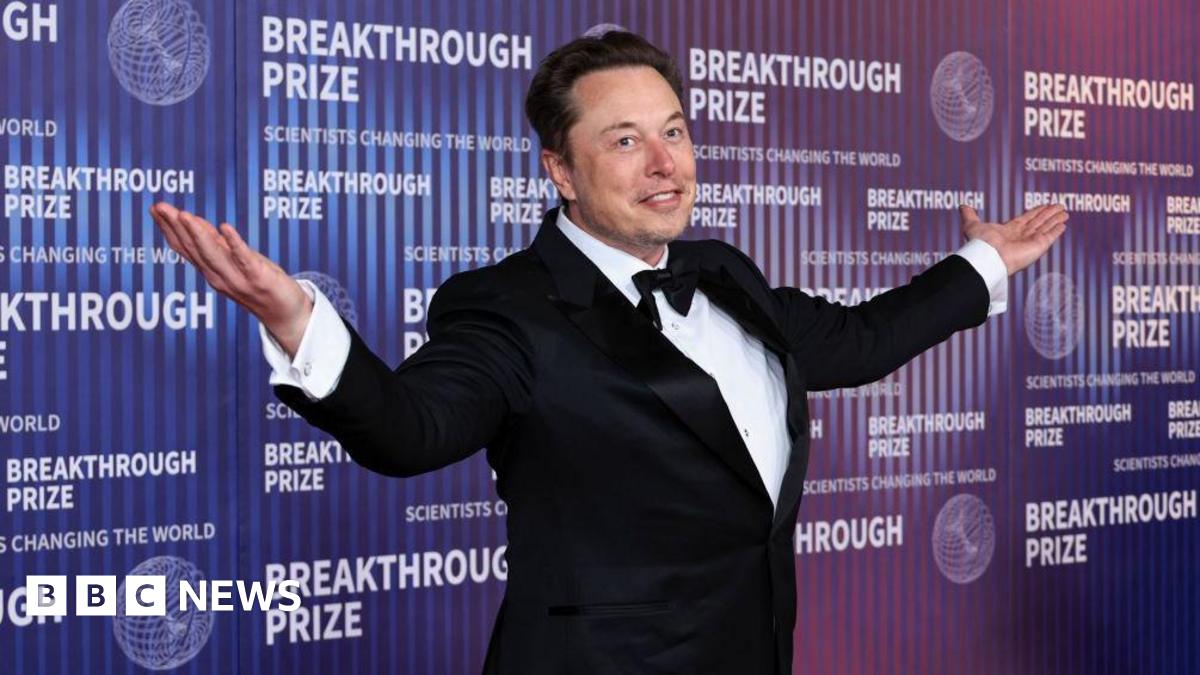
Tesla CEO Elon Musk has received a significant stock award worth an estimated $29 billion, representing one of the largest executive compensation deals in corporate history. This award, linked to a long-term performance plan, highlights Musk’s crucial role in the company’s swift expansion and shows Tesla’s trust in his leadership for the future.
The compensation package, which was initially approved by Tesla shareholders and the board several years ago, links Musk’s potential earnings to a series of ambitious operational and market capitalization milestones. This latest tranche of shares was triggered after Tesla met specific benchmarks, including sustained revenue growth, profitability targets, and an extended rise in the company’s market value.
This stock award is part of a broader incentive plan established in 2018, which set out a framework for Musk to earn up to 12 tranches of stock options if Tesla achieved a range of financial and strategic goals. With this most recent allocation, Musk has now unlocked several of those milestones, further entrenching his financial interest in the long-term performance of the electric vehicle maker.
The $29 billion valuation of Musk’s latest share award is based on Tesla’s current stock price and the number of vested options. It’s important to note that while this amount reflects theoretical value, Musk would need to exercise the options and possibly hold or sell shares to realize the full financial benefit. Additionally, he may face substantial tax obligations depending on how and when he executes the award.
Tesla’s compensation model for Musk is unique in the corporate world. Unlike most CEOs, he receives no salary or cash bonuses. Instead, his earnings are entirely derived from stock-based incentives, which align his interests with those of shareholders. This approach, though unconventional, has become a topic of interest in discussions about executive accountability and shareholder returns.
The company has defended the structure of Musk’s pay package by highlighting the transformative impact of his leadership. Under his tenure, Tesla has evolved from a niche electric car startup to a global manufacturing powerhouse and a leading innovator in renewable energy. The company’s portfolio now includes mass-market vehicles like the Model 3 and Model Y, luxury models such as the Model S and Model X, and industrial products including the Tesla Semi and energy solutions through Tesla Energy.
The board of directors at Tesla, in their official statements, have commended Musk for his unwavering determination, technical knowledge, and forward-thinking vision. They argue that his leadership has been crucial in advancing the company during times of significant financial strain and growth in operations.
Elon Musk’s growing stake in Tesla also reinforces his influence over the company’s future direction. As one of its largest individual shareholders, he retains considerable voting power and strategic sway. This dual role—as both chief executive and major investor—has occasionally sparked debates about governance and oversight, particularly among institutional shareholders and corporate watchdogs.
In the world of finance, the announcement of the stock compensation has elicited varied responses. Some experts see it as a well-deserved recognition for a CEO who has achieved remarkable outcomes, whereas others warn about establishing a benchmark for equally aggressive compensation schemes in other publicly traded corporations. Despite this, Tesla’s stock has shown strength, supported by ongoing investor confidence and the company’s strong quarterly performance.
Beyond the financial headlines, Musk’s stock award symbolizes a broader shift in how executive compensation is being structured in high-growth technology companies. With performance-driven plans gaining traction, boards are increasingly tying executive wealth to long-term metrics rather than short-term earnings or fixed salaries.
As Tesla continues to expand into new markets and technologies—including artificial intelligence, self-driving software, and lithium refining—Musk’s role is likely to remain central to the company’s strategic roadmap. Whether the current compensation framework will be adjusted or renewed in the future remains to be seen, but for now, the focus remains on execution and innovation.
The $29 billion figure is likely to feature prominently in public discussions around wealth concentration and corporate responsibility. However, it also serves as a case study in how bold leadership, when tied to clearly defined goals, can lead to unprecedented rewards—not only for the individual but for a company’s shareholders as well.
Over the next few months, Tesla shareholders and analysts will closely observe how the ongoing leadership of Musk influences the company’s path, particularly in the face of escalating competition in the electric vehicle field and changing global regulatory settings.
While compensation at this scale is bound to provoke debate, Tesla’s approach reflects a high-risk, high-reward philosophy that has so far delivered impressive results. Whether this model becomes a blueprint for future corporate governance or remains a singular case will depend on the company’s ability to sustain its momentum—and Musk’s ability to continue delivering on his ambitious vision.


